
Commerce
 Commerce
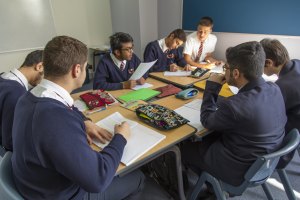
Commerce provides the knowledge, skills, understanding and values that form the foundation on which young people make sound decisions on consumer, financial, business, legal and employment issues. It develops in students an understanding of commercial and legal processes and competencies for personal financial management.
Business Studies
As a course, Business Studies is distinctive in that it encompasses the theoretical and practical aspects of business in contexts which students will encounter throughout their lives. Conceptually, it offers learning from the planning of a small business to the management of operations, marketing, finance and human resources in large businesses. Through the analysis of contemporary business strategies the course also provides rigour and depth and lays an excellent foundation for students either in tertiary study or in future employment.
 Economics
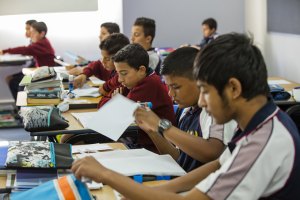
Economic decisions have a crucial influence on the quality of life experienced by people throughout the world. The study of Economics can help individuals, groups and societies make choices that assist them to improve their quality of life.
Students will benefit from the study of Economics as they engage in studies that include business, accounting and finance, banking, media, law, marketing, employment relations, tourism, history, environmental studies or public sector employment.
Business Studies
As a course, Business Studies is distinctive in that it encompasses the theoretical and practical aspects of business in contexts which students will encounter throughout their lives. Conceptually, it offers learning from the planning of a small business to the management of operations, marketing, finance and human resources in large businesses.
Through the analysis of contemporary business strategies the course also provides rigour and depth and lays an excellent foundation for students either in tertiary study or in future employment.
Economics
Economic decisions have a crucial influence on the quality of life experienced by people throughout the world. The study of economics can help individuals, groups and societies make choices that assist them to improve their quality of life.
Students will benefit from the study of economics if they engage in studies that include business, accounting and finance, banking, media, law, marketing, employment relations, tourism, history, environmental studies or public sector employment.
Design & Technology
We are living in a rapidly changing technological society and the study of technology revolves around the concepts of design, problem solving and critical thinking. Students have the opportunity to investigate many different areas of design and experience a range of tools and materials. They learn about the elements and factors of design and how these contribute to successful and innovative design solutions.
In Year 7, students firstly have the opportunity to be structural engineers, designing and producing bridges which demonstrate a high level of skill and creativity. They then have the opportunity to learn cross-stitching techniques. Finally, they end the year exploring graphic design strategies, using the computer to develop advertisements.
Students in Year 8 begin the year exploring interior design techniques and how interior designers incorporate the elements of design to redesign rooms. Students then take on the role of website designers, designing a website about a mental health issue. Finally, students in Year 8 take part in food technology, using the school’s new food technology lab, and exploring a range of cooking techniques.
English
“Once you learn to read, you will be forever free.” — Frederick Douglass
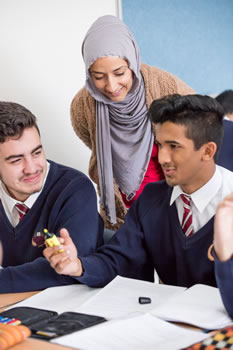 Language is our primary source of communication. The study of English is central to the learning and development of all young Australians. It helps create confident communicators, imaginative thinkers and informed citizens. It is through the study of English that individuals learn to analyse, understand, communicate and build relationships with others and with the world around them. The study of English plays a key role in the development of reading and literacy skills which help young people develop the knowledge and skills needed for education, training and the workplace. It helps them become ethical, thoughtful, informed and active members of society.
The English programs at Al Noori MuslimSchool gear students towards understanding themselves as part of a wider Australian and global community. The programs are therefore developed in light of the fact thatthey will shape the attitudes and capabilities of those who will take responsibility for Australia’s future. This includes choosing texts and text-types that reflect the diversity of our own students’ cultural backgrounds in the high school, as well as exposing them to values and cultures beyond their own immediate experiences.
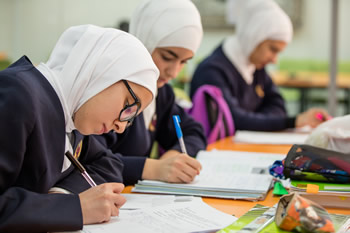 Assessment
In English, students are assessed in a variety of modes. Students are encouraged to develop and refine their skills, and to show their understanding of themselves, others and the world through:
- Reading
- Writing
- Speaking
- Listening
- Viewing and representing.
They learn to create and reflect on increasingly complex and sophisticated spoken, written and multimodal texts across a growing range of contexts with accuracy, fluency and purpose.
 Senior English
There Senior English courses offered to students at Al Noori include:
- Standard English
- Advanced English
- Extension 1 English.
Each of these senior courses caters to the various needs of students and offers students at Al Noori the opportunity to pursue their interests and cultivate the skills they developed in their junior English courses.
Geography
Rationale
Geography is the study of places and the relationships between people and their environments. It is a rich and complex discipline that integrates knowledge from natural sciences, social sciences and humanities to build a holistic understanding of the world. Students learn to question why the world is the way it is, reflect on their relationships with and responsibilities for the world and propose actions designed to shape a socially just and sustainable future.
 Geography emphasises the role, function and importance of the environment in supporting human life from local to global scales. It also emphasises the important interrelationships between people and environments and the different understandings of these relationships. The wellbeing of societies and environments depends on the quality of interactions between people and the natural world.
Geographical inquiry involves students acquiring, processing and communicating geographical information. Through an inquiry approach students explain patterns, evaluate consequences and contribute to the management of places and environments in an increasingly complex world. This process enables them to apply inquiry skills including: asking distinctively geographical questions; planning an inquiry and evaluating information; processing, analysing and interpreting that information; reaching conclusions based on evidence and logical reasoning; evaluating and communicating their findings; and reflecting on their inquiry and responding, through action, to what they have learned. Engagement in fieldwork and the use of other tools including mapping and spatial technologies are fundamental to geographical inquiry.
Stage 4
By the end of Stage 4, students describe geographical processes that influence the features and characteristics of places and environments across a range of scales. They describe how places are perceived and valued differently and explain interconnections within environments and between people, places and environments. Students investigate environmental change and differences inhuman wellbeing and discuss strategies for addressing geographical challenges, taking into account environmental, economic and social factors.
Stage 5
By the end of Stage 5, students explain geographical processes that change features and characteristics of places and environments over time and across scales and explain the likely consequences of these changes. They analyse interconnections between people, places and environments and propose explanations for distributions, patterns and spatial variations over time and across scales. Students compare changing environments, analyse global differences in human wellbeing, explore alternative views to geographical challenges and assess strategies to address challenges using environmental, social and economic criteria.
Students undertake geographical inquiry to extend knowledge and understanding, and make generalisations and inferences about people, places and environments through the collection, analysis and evaluation of primary data and secondary information. They propose explanations for significant patterns, trends, relationships and anomalies in geographical phenomena. Students propose solutions, and may take action to address contemporary geographical challenges, taking into account alternative points of view and predicted outcomes. Students participate in relevant fieldwork to collect primary data and enhance their personal capabilities and workplace skills.
History
RATIONALE
History is a disciplined process of inquiry into the past that helps to explain how people, events and forces from the past have shaped our world. It allows students to locate and understand themselves and others in the continuum of human experience up to the present.  History provides opportunities for students to explore human actions and achievements in a range of historical contexts. Students become aware that history is all around us and that historical information may be drawn from the physical remains of the past as well as written, visual and oral sources of evidence.
The study of History strengthens an appreciation for and an understanding of civics and citizenship. It also provides broader insights into the historical experiences of different cultural groups within our society and how various groups have struggled for civil rights, for example Aboriginal and Torres Strait Islander peoples, migrants and women.  History encourages students to develop an understanding of significant historical concepts such as cause and effect, change and continuity, significance, empathy and contestability.
History provides the skills for students to answer the question ‘How do we know?’ An investigation of an historical issue through a range of sources can stimulate curiosity and develop problem-solving, research and critical thinking skills. It develops language specific to the discipline of History and provides opportunities to further develop literacy skills. Students learn to critically analyse and interpret sources of evidence in order to construct reasoned explanations and a rational and informed argument based on evidence, drawn from the remains of the past. Students engage in research involving traditional methods and ICT, including evaluating web-based sources and using a range of technologies for historical research and communication.
Stage 4
By the end of Stage 4, students describe the nature of history and archaeology, and explain their contribution to an understanding of the past. They describe major periods of historical time and sequence events, people and societies from the past. Students recognise and explain patterns of change and continuity over time and explain the causes and consequences of events and developments. They describe and assess the motives and actions of people in the past. Students demonstrate an understanding of the causes and effects of events, past societies and developments over time.
Stage 5
By the end of Stage 5, students describe, explain and assess the historical forces and factors that shaped the modern world and Australia. They sequence and explain the significant patterns of continuity and change in the development of the modern world and Australia. They explain and analyse the motives and actions of past individuals and groups in the historical contexts that shaped the modern world and Australia. Students explain and analyse the causes and effects of events and developments in the modern world and Australia. Students explain the context for people’s actions in the past. They explain the significance of events and developments from a range of perspectives. They explain different interpretations of the past and recognise the evidence used to support these interpretations.
Stage 6 Ancient History
The study of Ancient History in Stage 6 enables students to:
- develop knowledge and understanding of the ancient world, historical skills, and values and attitudes essential to an appreciation of the ancient world
- develop a lifelong interest in the study of history
- prepare for active and informed citizenship in the contemporary world.
Year 11 Course Structure and Requirements
The Year 11 course is structured to provide students with opportunities to develop and apply their understanding of methods and issues involved in the investigation of the ancient past. Through the use of archaeological and written sources, students investigate various aspects of the ancient world, including historical sites, people, societies, events and developments.
Year 12 Course Structure and Requirements
The Year 12 course is structured to provide students with opportunities to apply their understanding of archaeological and written sources and relevant historiographical issues in the investigation of the ancient past.
Information Software Technology
Information and Software Technology allows students to explore issues that are affecting our rapidly changing society. Students investigate legal, social and ethical issues that have arisen with the widespread use of technology.
This subject also gives students the opportunity to learn about robotics, where students construct and program a robot to perform a range of tasks.
Students then investigate digital media and its impact on our daily lives. They use a range of data types to develop a ‘slowmation’about a topic of their choice.
Finally, students learn about multimedia. They have the opportunity to explore and use the online resource “Prezi” to develop a digital profile of themselves and their achievements.
Mathematics
A mathematician is a blind man in a dark room looking for a black cat which isn’t there. Charles Darwin
 For many, this statement can be very difficult to believe. But almost everyone who has ever studied or been taught Mathematics will have encountered that special and unique moment when a concept or idea just made sense.
The trouble for most students, past and present, is that the all-important “correct answer” has been their major (and sometimes only) objective when answering a mathematical question. Certainly finding the correct solution to a problem is important, but the study of Mathematics is so much more than this limited, one-dimensional approach. It is so important for students to see the relevance and significance of mathematics in their daily lives.
 The general aims of the Mathematics Faculty at Al Noori Muslim School are to develop and enhance the students’ confidence and enjoyment in doing mathematical activities, their knowledge, skills and understanding of syllabus-based content as well as their awareness of the place of mathematics in solving problems of everyday life and in contributing to the development of our society.
These aims are pursued in the knowledge that students learn best when motivated and that they are encouraged to explore, search and question mathematics as individuals within a context of intellectual, physical and social growth.
 In achieving these aims students develop the knowledge, skills and understanding of the 4 main strands arranged by the NSW Education Standards Authority (NESA) including Working Mathematically, Number and Algebra, Measurement and Geometry and Statistics and Probability.
In all years at Al Noori Muslim School, the Mathematics classes are structured to cater for all levels of ability and interest. Our aim is to use hands-on material, practical ideas and appropriate language in the development of their mathematical understanding. Technological aids are used appropriately to improve the understanding of concepts as well as developing the basic numeracy skills of each student. Students are given opportunities to participate in Science, Technology, Engineering and Mathematics (STEM) activities and excursions such as STEM Day, Mathematics and Surveying and “Mathsinspiration”.
.
Music
MUSIC
Students at Al Noori study Music only in Stage 4 for one year, and for most of the students, it will be the only time in their lives that they undertake formal music studies. Therefore it is a unique opportunity to learn the inner workings of an artform that is all around us. There is also research that suggests studying music helps students across a range of other subjects, as when students play music their brains function in a way that is highly unique, and different from how it functions while studying other subjects.
Even if one chooses not to listen to music, in a modern western society it is very difficult to avoid it – music plays in the shops, at the gym, on TV, in moviesand video games.It is a very powerful tool to change our emotions, and if there is no understanding of how this process works, then we tend to be swayed on a subconscious level. However, KNOWLEDGE IS LIGHT as our school motto says – by studying the mechanics of music, we can have power over it.
In the first semester at Al Noori, students learn the technical/mathematical side of music, particularly rhythm and pitch. Their learning is supported through playing percussion instruments and keyboards, and singing. With a firm grasp of this, we are able to look more closely in term 3 at the way music is used to manipulate us through advertising. Because musical instruments are chosen by composers for particular emotional effects, we also spend some time learning about the different instruments that are commonly used, and why. Then in term 4, the students write and perform their own rap songs in small groups, where they are encouraged to explore topics that are relevant to young Muslims living in modern western society.
The whole year covers both the technical and emotional aspects of music, giving students a thorough and rounded introduction to music that not only gives some basic technical skills, but can also enrich their listening, or protect them from undue influence from music, for the rest of their lives inshAllah.
Personal Development, Health & Physical Education (PDHPE)
Al Noori Muslim School currently teaches PDHPE in Stages 4 and 5 (Years 7-10). PDHPE is a dynamic and multifaceted subject area that aims to develop well-rounded students that are proactive in developing and maintaining an excellent level of personal health and promoting the health of their community. The PDHPE syllabus is reinforced by developing students who become connected with the wider community and have the resilience to cope with life’s challenges. We deliver a curriculum that promotes striking a balance between the physical, social, emotional and spiritual dimensions of health. At Al Noori Muslim School we strive to ensure that all aspects of the PDHPE course are delivered in harmony with the Islamic ethos.
PDHPE Theory Units
Year 7 – Health Matters, Adolescence & Change, Get Active Get Healthy, Summer Fun.
Year 8 – Risky Business, Dealing with Mental Health, Drugs, First Aid
Year 9 – Overcoming Adversity, Sexual Health, Celebrating Diversity, Healthy Food Habits.
Year 10 – Guy/Girl Talk, Road Safety, Making a Difference, Drug Use.
PDHPE Practical Units
AFL (AFL NSW Multicultural Program), Oztag, Soccer/Futsal, Cricket, Table Tennis, Endzone, Lacrosse, Softball, Teeball, Basketball, Dodgeball, Fitness Testing, Gym (Weights & Cardio), and Swimming (Years 7 & 8 only).
The PDHPE faculty organise and run the Athletics Carnivals (Secondary) each year with students allocated into one of four teams (Thunder, Hurricanes, Lightning, Flames). Athletics Carnivals offer a range of track and field events, with students competing in age groups to win ribbons and gain points for their team. The team with the most points is crowned Athletics Carnival Champions. Age champions are also rewarded with medals and trophies at the School Presentation Ceremony in Term 4.
Science
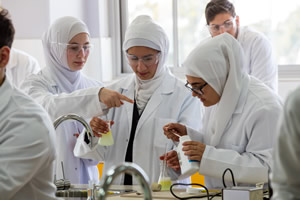 Science Faculty
The Science faculty at Al Noori Muslim School is a team of professional teachers dedicated to academic excellence and innovative practices. All members of the faculty have a strong belief in the value of the courses they teach as essential components of a good education. The Science faculty has the very important task of introducing students to the world of Science.
Faculty Aims
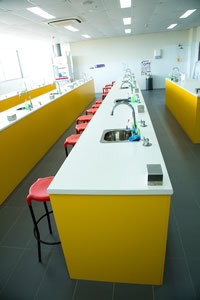 The Science Faculty seeks to engender a broad scientific curiosity in students through a practice that encourages students to achieve to their potential in the science disciplines.
List of subjects offered by the faculty
Science courses offered at AMS – stage 4/5 Science (compulsory course for Years 7 through 10) and stage 6 subjects (elective subjects in years 11 and 12): Chemistry, Physics, Biology, and Senior Science.
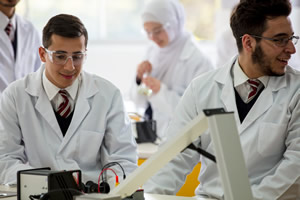 Compression Course: HSC Biology is offered to students who display an exceptional talent in the stage 5 Science (year 9 and 10) course. This allows students to get ahead of their peers and complete a HSC course, a year earlier, giving them more room for excelling in the remaining HSC subject.
Extracurricular each faculty provides
The Science Faculty provides access to Science competitions, Science Fair,Valid, and field trips to many important research institutions such as ANSTO, Universities, Museums.
Sport
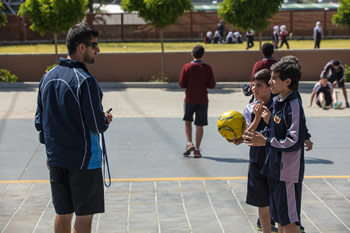 Al Noori Muslim School has a Weekly Sport Program that runs on Tuesday afternoons which is compulsory for all students in Years 7-10. This program includes a combination of recreational and sporting activities that provide students with a variety of experiences to promote the development of physical, psychomotor, emotional and social skills. Students rotate activities halfway through each term and either walk to a local park or travel by bus to venues.
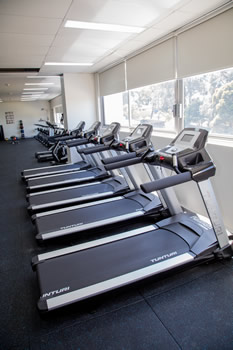 The Recreational Sports Program sports/activities
- Auburn PCYC – Basketball, Futsal, Table Tennis, Fitness
- Auburn Tennis Centre – Tennis
- Kik Off Lakemba – Futsal
- Strathfield Superbowl – Ten Pin Bowling
- Olympic Park Sports Centre – Basketball, Volleyball, Futsal
- Roberts Park/Gosling Park – Oztag, Touch Football, Cricket, Soccer
- School grounds – Table Tennis, Badminton, Volleyball, Gym
Gala Days
Al Noori Muslim School is part of the Faith Shield Islamic Schools’ competition which runs Oztag and Soccer Gala Days in each term. The Faith Shield currently includes six Islamic schools from the Sydney South-West and Greater Western Sydney Regions.
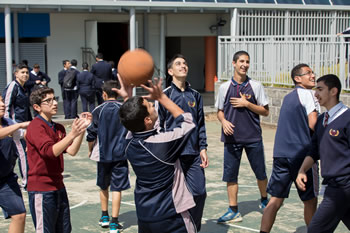 The school also competes in other competitions which include the Bachar Houli Cup, Bill Turner Cup, GoActive Tri-Sports Tournament, NSW Touch Football School Competition, Western Sydney Wanderers’ School Cup, and NRL League Tag Gala Days.
Gifted & Talented Athletes
Each year students are selected through the AFL NSW Multicultural Program to represent the NSW/ACT AFL team at the All Nations Diversity Championships. Students spend one weekend in an elite training camp at the Indigenous Centre of Excellence in Redfern before competing in the week-long competition against other States. The championships are held in a different State each year.
Visual Arts
‘This world is but a canvas to our imagination.’
Henry David Thoreau
At Al Noori Muslim School Secondary Campus we offer Visual Arts and Visual Design from years 7-10. Creative thinking, practical skills, visual awareness and visual literacy are at the core of our teaching focus.
Year 7 – Stage 4 Visual Arts
Portraiture
We use creative colours, splendid shapes and terrific textures to make cubist creations and fruit faces to create portraits.
Animation/film
Amazing animation and fantastic films are undertaken in film workshops where students had the chance to be creative with clay.
Architecture and design
We are serious about science and analytical about art to study the amazing architecture and mesmerising mosaics of the Islamic world. Creating futuristic architectural design of what we think the Middle East would look like in the year 2050.
Graphic Design
We also take a greater look at graphics, analyse advertising, ponder products and the mixed up messages they send. We make products and graphics that are bright and bold.
Year 10- Stage 5 Visual Design
Magazines and Propaganda
Students become media mad and decode the world of the visual image.
Photo Paparazzi
Photo production and website design. Students unlock the skills of the photographic image.
Film
Creating a short film for a film festival.
Architecture and object design
Creating objects and environments.
Library
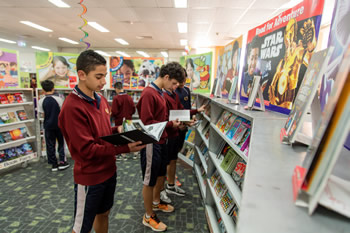
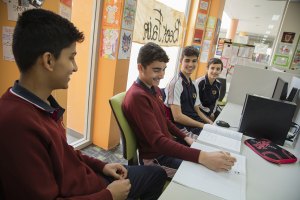
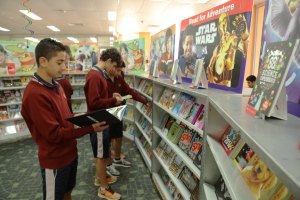
The high school library has experienced another busy year, catering not only for the information needs of students from Year 6 to Year 12, but perhaps more importantly, providing a haven amidst a demanding school environment, for students to rest and relax and pick up the latest book (currently, Fantastic Beasts). The library collection continues to expand and students have also had the chance to purchase their own books through our annual Scholastic book fair.
Year 6 library lessons this year have again focused on aspects of information literacy and among other activities, we have looked at how to use the school and a public library catalogue, how to use an index and a glossary in a book, and how to determine the authority and authenticity of a website.
The importance of reading should not be underestimated – we subconsciously absorb spelling, sentence structure and grammar when we read and this in turn, has a positive impact upon the quality of our writing skills. The Prophet Muhammad (sallallahualayhiwasallam) told us to seek knowledge from the cradle to the grave. Books are the gateway through which knowledge may be gained.
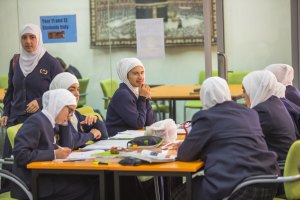
Legal Studies
 The course explores how the law applies in practical situations. Special emphasis is placed on how the law concerns individuals in society, particularly regarding their rights and obligations. These rights and obligations are explored through various topics in both the preliminary and HSC course such as ‘Individuals and the Law’, ‘Crime’ and ‘Human Rights’. The course has a strong focus on the interrelationship between the legal system and society in both a domestic and international context. This is evident, especially in the HSC course throughout topics such as ‘Family’, ‘Shelter’ and ‘Human Rights’.
A highlight of the Preliminary Legal Studies Course is an excursion to the ‘Downing Centre Local and District Court’ where students get an insight into court proceedings and get to witness real civil and criminal cases. A highlight of the HSC course is attendance to the Legal Studies Association lectures where students meet HSC markers and receive tips and recommendations on enhancing performance in the HSC.
 Students undertaking Legal Studies at Al Noori have the opportunity to examine the role and impact of the law on various groups and individuals within Australian society in a variety of legal contexts. Students get the opportunity to learn about:
- Importance of both the Australian and International Legal Systems
- The nature of cybercrime and how cyberspace affects our everyday lives
- Use of DNA for solving crimes
- Children and the Law
- Groups that are in conflict with the state such as Outlaw Motorcycle Gangs
Finally, the course seeks to enhance students’ skills in organising, researching and collecting legal information to write logical, cohesive and structured arguments which in-turn develops their writing skills; a skill required for multiple subject areas and essential to undergo further education in the future.
Stage 6 – Studies of Religion
RATIONALE
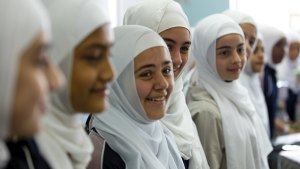 Religion has been and is an integral part of human experience and a component of every culture. An appreciation of society is enhanced by an understanding of religion, its influence on human behaviour and interaction within culture. The Stage 6 Studies of Religion syllabus acknowledges religion as a distinctive answer to the human need for meaning in life. An understanding of religion provides a perspective for the human view of reality and deals with daily living as well as with the ultimate source, meaning and goal of life. Religion is generally characterised by a worldview that recognises a supernatural dimension – belief in divinity or powers beyond the human and/or dwelling within the human.
The Studies of Religion syllabus acknowledges that there are many ways of studying religion. It investigates the significance of the role of religion in society and, in particular, within Australian society. It recognises and appreciates the place and importance of Aboriginal belief systems and spiritualities in Australia. This syllabus enables students who live in a multifaith and multicultural society to progress from a broad understanding of religious traditions to specific studies within these traditions. The syllabus provides a focus on religious expression in Australia and, also, investigates religion’s place within the global community.  The syllabus is designed for students in all schools and ensures students study more than one religious tradition. The course enables students to come to an understanding that each religious tradition has its own integrity and contributes to a well-ordered society. It endeavours to assist in the provision of a context within which schools have the opportunity to foster students’ academic, affective and spiritual development.
Studies of Religion emphasises the development of skills of analysis, independent research, collaboration and effective communication. These skills empower students to become critically reflective life-long learners. Studies of Religion provides a learning experience that prepares students for further education and training, employment and full and active participation as citizens within society.